Chinese cuisine is often spoken about as though it were a single culinary tradition. In reality, every region has its own techniques, ingredients, and philosophies, shaped by geography and generations of cooking. Yet beyond China, one style has largely come to define Chinese fine dining: Cantonese cuisine, known for its emphasis on freshness, restrained seasoning, and allowing ingredients to speak for themselves.
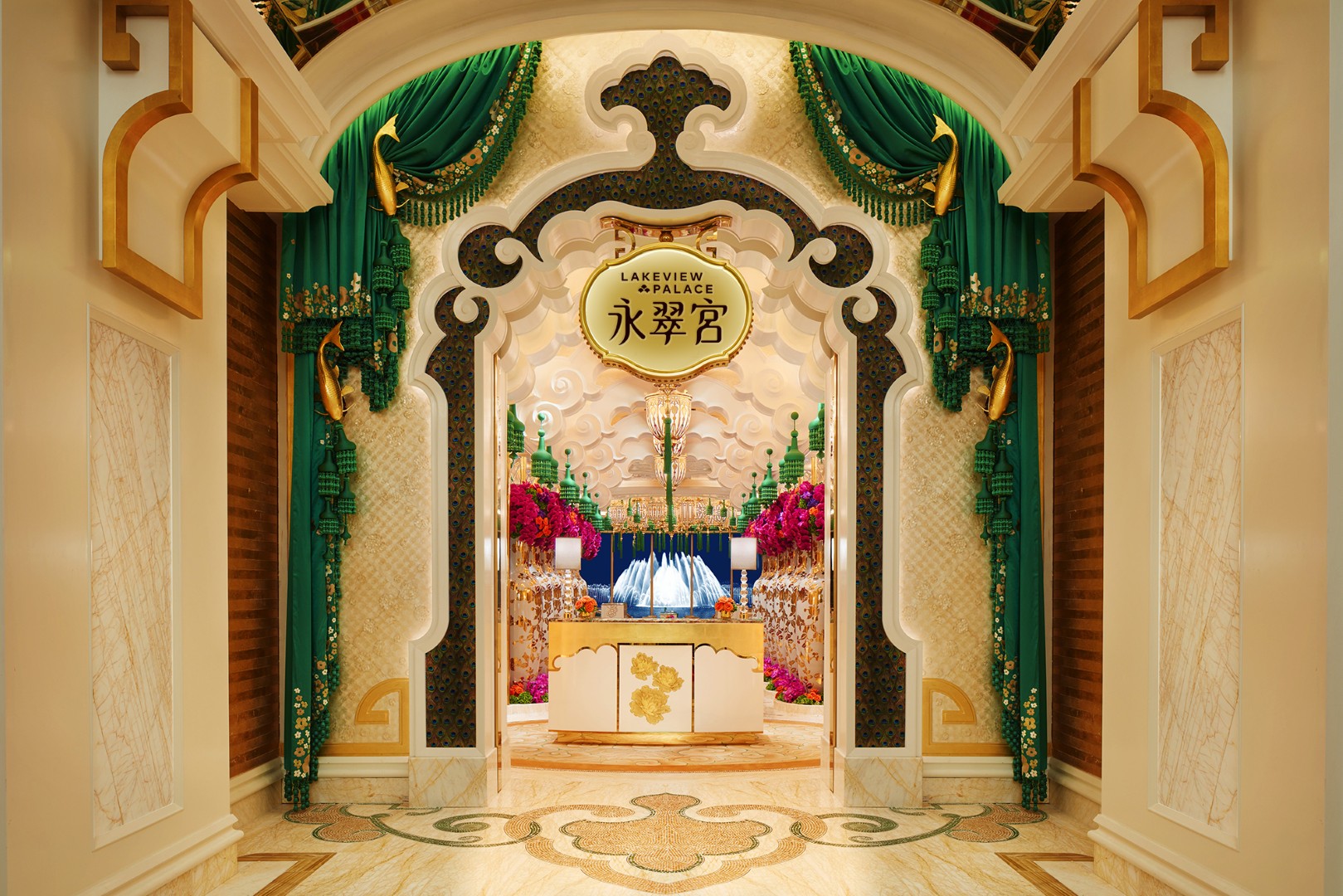
At Lakeview Palace, the contemporary Jiangnan restaurant at Wynn Palace Macau, the conversation begins somewhere else. Rather than centering its newest menu on a single regional identity, the restaurant explores the meeting point between Huaiyang and Cantonese cooking—two of China’s most celebrated culinary traditions brought together through what it calls its “Huaiyang-Cantonese Confluence.” The result isn’t a fusion menu, but a collection of dishes that quietly demonstrate how the two cuisines can complement one another.
Looking Beyond Cantonese
For many international diners, Huaiyang cuisine remains far less familiar than its Cantonese counterpart, despite being recognized as one of China’s Four Great Culinary Traditions. Originating from the Jiangnan region—covering parts of Jiangsu and Zhejiang—Huaiyang cooking is defined by meticulous knife work, precise techniques, seasonal ingredients, and an emphasis on elegance over excess. Every cut, texture, and cooking method carries intention, allowing subtle flavours to emerge naturally.
At Lakeview Palace, that philosophy is paired with the ingredient-led approach of Cantonese cuisine. Rather than allowing one tradition to overshadow the other, the restaurant looks for the moments where they naturally overlap. Delicate preparations are enhanced with Cantonese aromatics, while familiar regional recipes are revisited through techniques borrowed from both culinary traditions.
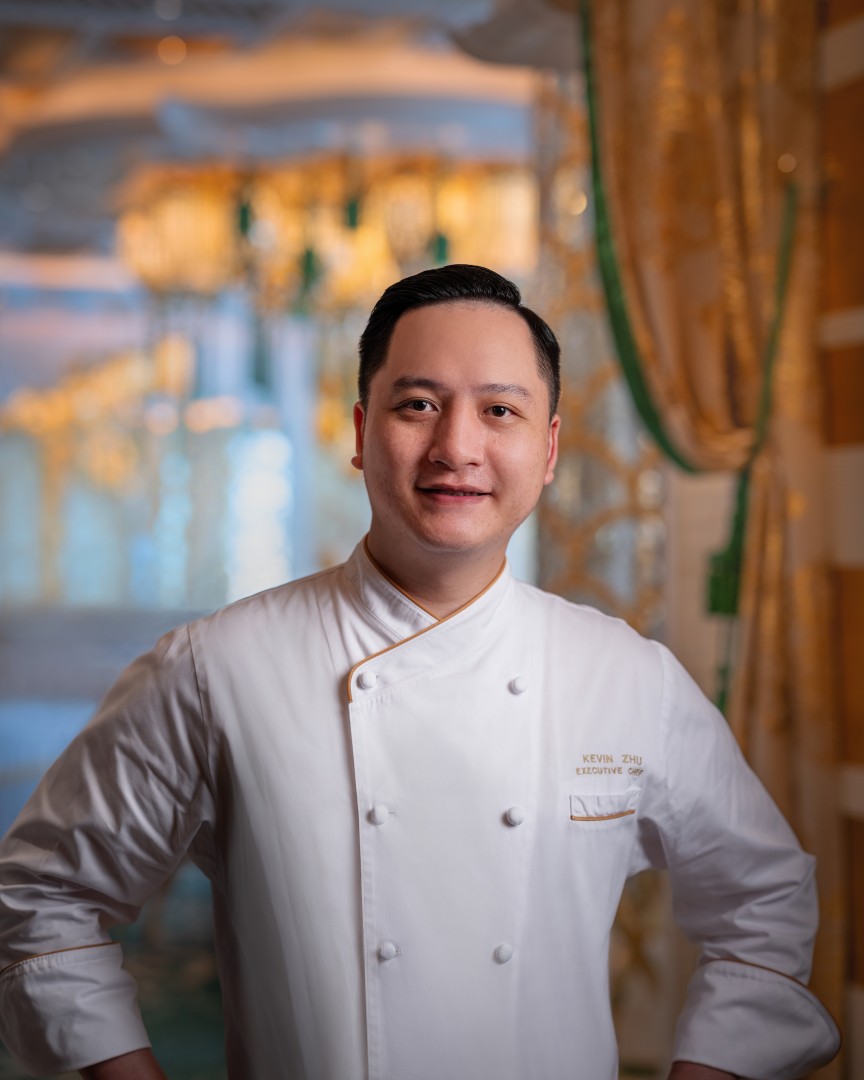
Leading that vision is Executive Chef Kevin Zhu, whose career has been shaped by both worlds. Having trained at Guangzhou’s renowned Lei Garden before refining his understanding of Shanghainese and Taizhou cuisine at the MICHELIN-starred Xin Rong Ji, Zhu has spent more than 16 years mastering the distinct characteristics of Huaiyang and Cantonese cooking. Throughout that journey, one principle has remained constant: great cooking begins with respect for ingredients and attention to detail.
That philosophy now finds its clearest expression through Lakeview Palace’s latest menu.
A Dialogue Between Two Culinary Traditions
Rather than introducing entirely new ideas, many of the dishes begin with recipes that have existed for generations before being carefully reinterpreted for today’s diners.
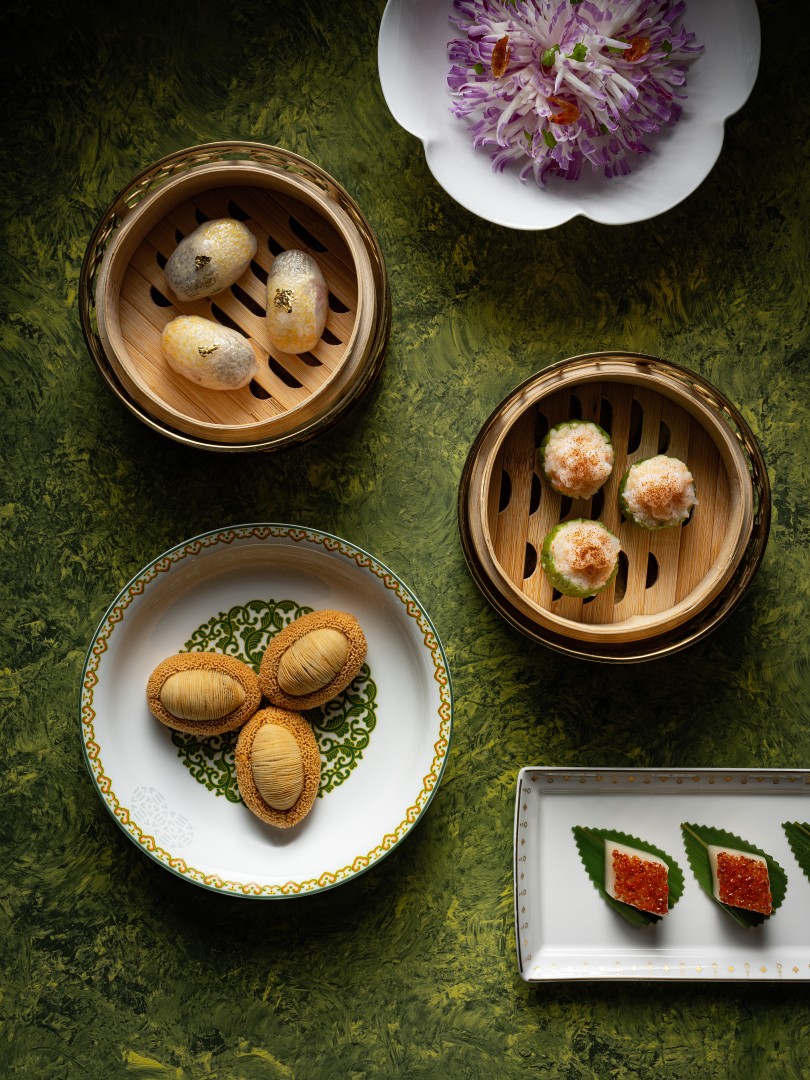
The Braised Abalone and Pork Belly Puff, for instance, takes inspiration from Shanghai’s beloved hong shao rou, or braised pork belly. Here, the slow-braised pork is paired with diced abalone before being wrapped inside a crisp pastry shaped like an abalone shell. Familiar flavours remain intact, while the presentation introduces a more contemporary expression of a classic Jiangnan dish.
Technique plays an equally important role in the Crystal Skin Dumplings with Min Dong Yellow Croaker. Built with a delicate double-layer wrapper, the dumpling combines crystal-clear dough with an inner wrapper made from yellow croaker skin to preserve both texture and freshness. Inside, finely diced yellow croaker, leopard coral grouper, and bamboo shoots create layers of flavour that reflect Huaiyang cuisine’s precision and attention to craftsmanship.
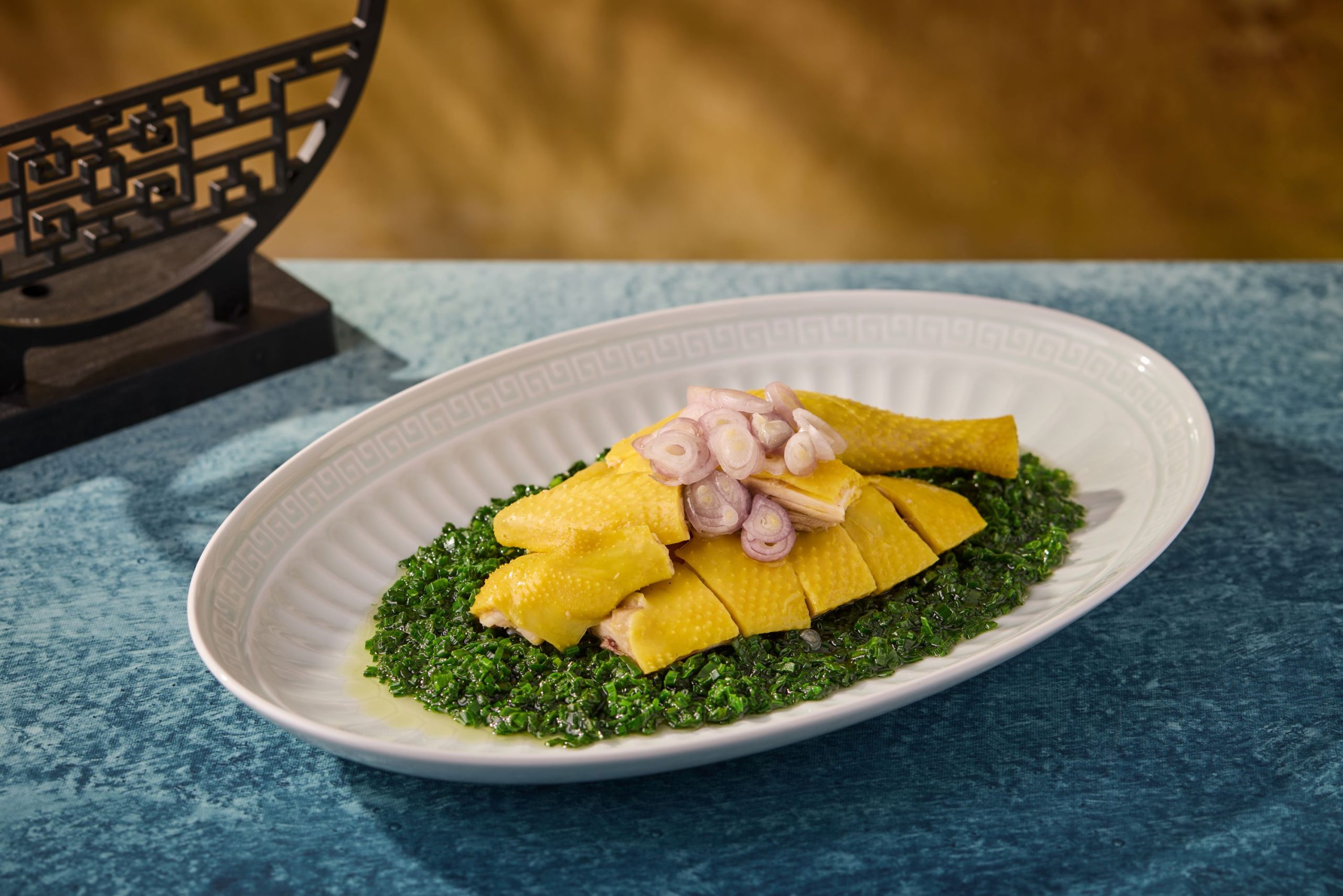
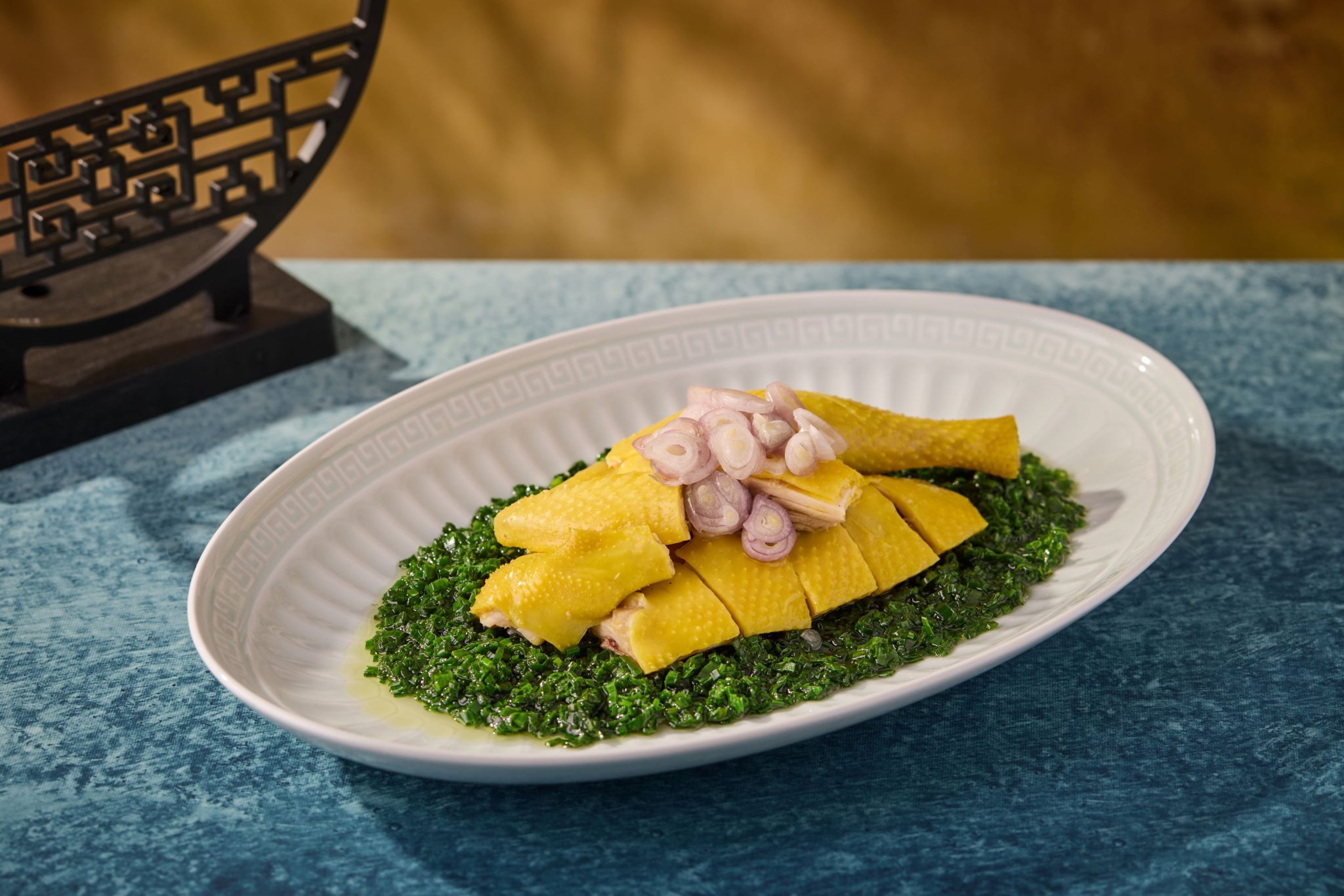
Elsewhere, the Poached Chicken with Scallion Oil offers perhaps one of the clearest examples of the restaurant’s culinary philosophy. A prized Sunflower Chicken, chosen for its naturally tender texture, is finished with fragrant Old Shanghai scallions alongside Cantonese red shallots. The combination allows Huaiyang’s understated elegance to meet the aromatic depth often associated with Cantonese cooking, producing a dish that feels remarkably balanced despite its simplicity.
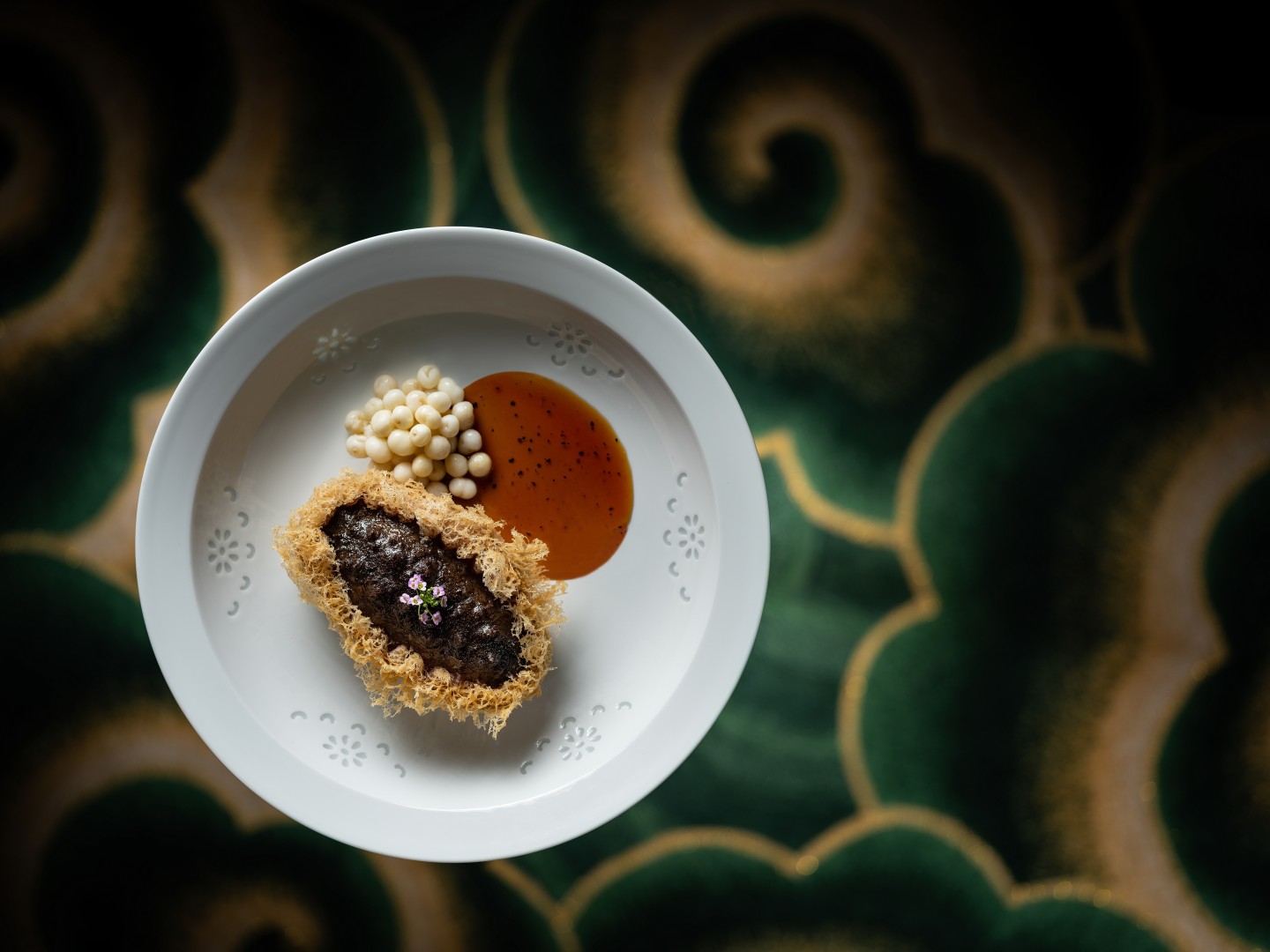
That conversation between regions continues with the Braised Kanto Sea Cucumber Stuffed with Shrimp, Goose and Taro Purée, inspired by Nanjing’s traditional Wenwu Duck. Instead of following the original recipe directly, Chef Zhu reimagines it using Magang goose from Guangdong, blending it with hand-pounded shrimp paste before stuffing it into sea cucumber, coating it with silky taro purée, and lightly frying it until crisp. The final drizzle of black pepper sauce ties together Huaiyang stuffing techniques with Cantonese ingredients in a way that feels rooted in tradition while comfortably contemporary.
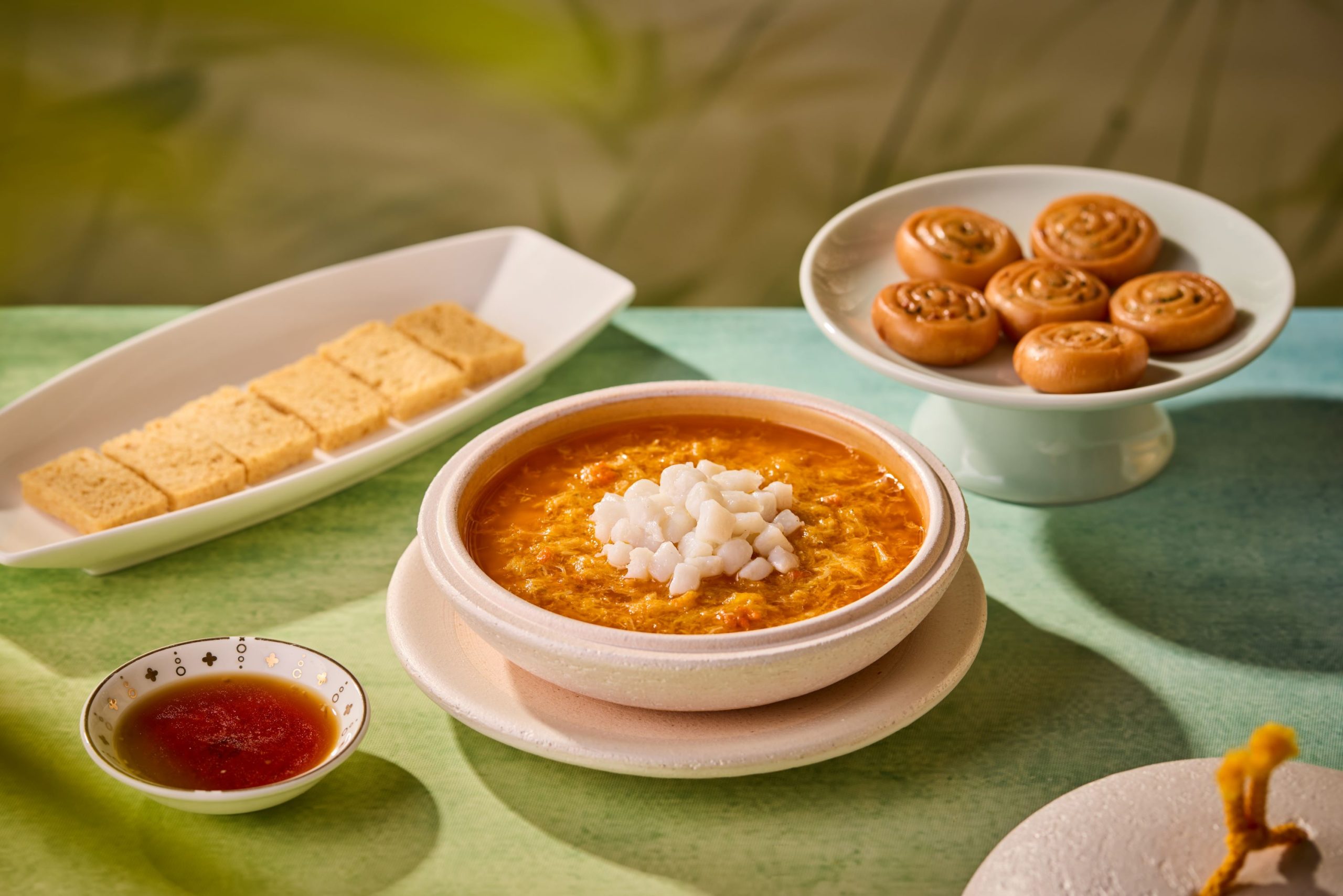
Among the menu’s standout dishes is also the Jiangnan Style Sautéed Crab Roe, a tribute to the Huaiyang classic Fish and Rice Land. Fresh crab roe and sweet crab meat are gently cooked over low heat with 20-year-aged Huadiao wine and a touch of vinegar, allowing the natural sweetness of the seafood to develop without overwhelming seasoning. Served alongside toasted bread and sesame scallion pancakes, the dish reflects one of Jiangnan cuisine’s defining ideas: letting the quality of the ingredients carry the conversation.
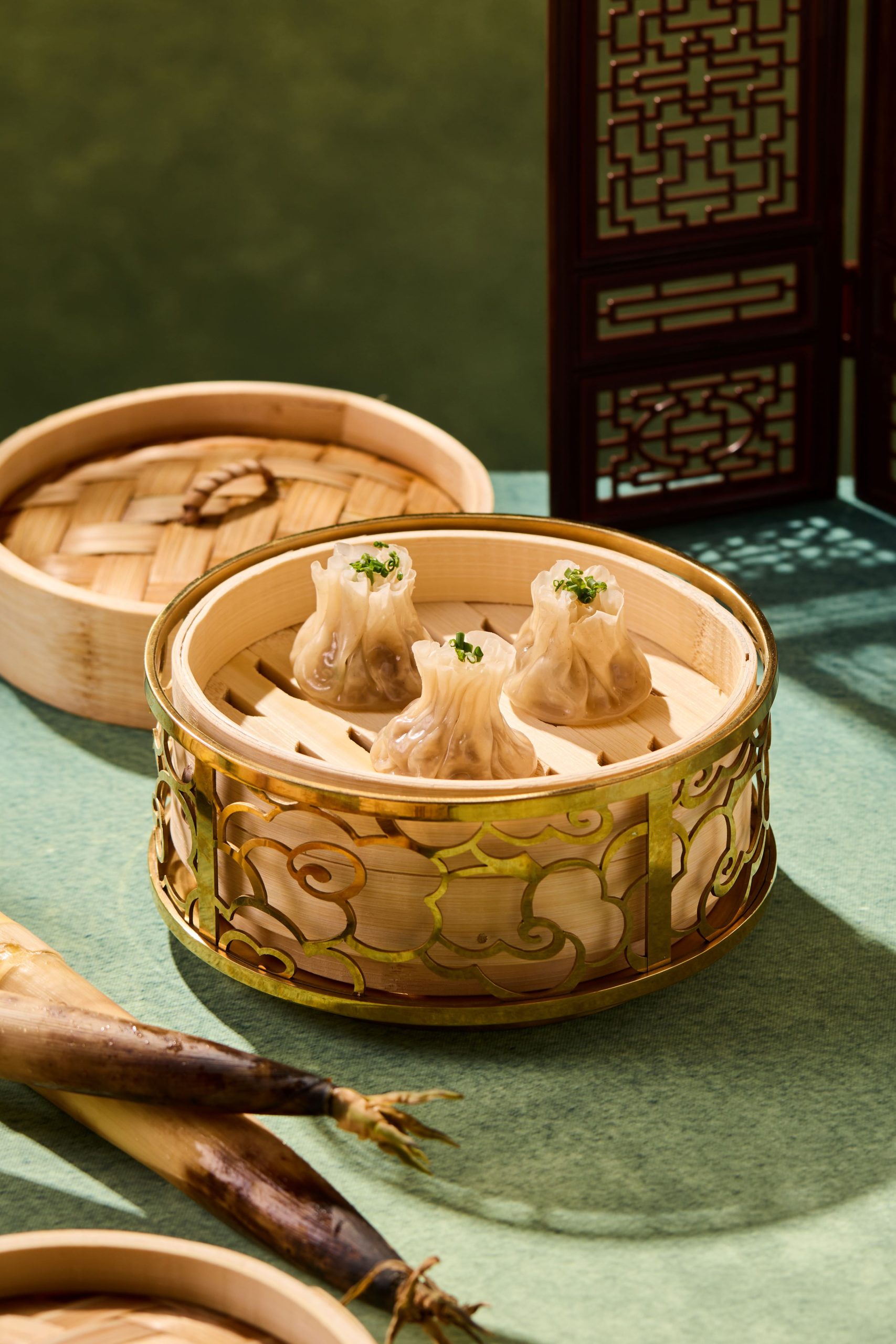
Lunch introduces another side of Lakeview Palace through a collection of dim sum that extends the same philosophy into smaller bites. The Steamed Fresh Bamboo Shoot Soup Siu Mai, inspired by the ancient water town of Shengze, combines pork, aspic, and seasonal bamboo shoots beneath an intricately pleated top that resembles a blooming lotus leaf. Like many dishes throughout the menu, craftsmanship is expressed not through complexity alone, but through precision and restraint.
More Than a New Menu
While the latest additions introduce fresh expressions of Lakeview Palace’s cooking, they also sit comfortably alongside signature dishes that have come to define the restaurant, including the Chinese Sugar-fried Dough Made with Indian Almond, Quinoa, Sesame, Macadamia and Crispy Eel, Steamed Snow Crab with Lobster Bisque Huadiao Egg White, and the Double-boiled Triple-layer Duck in Lingnan Three Treasures Supreme Soup.
Together, they reinforce what Lakeview Palace has been quietly building since opening: a restaurant less interested in choosing between Huaiyang and Cantonese traditions than exploring how they can coexist on the same table.
In a dining landscape where Chinese cuisine is often represented through a single regional lens, Lakeview Palace offers a broader perspective. Its newest menu isn’t simply about introducing new dishes. It invites diners to discover how two of China’s most influential culinary traditions continue to shape one another, one carefully composed plate at a time.
Lakeview Palace
Wynn Palace, Av. da Nave Desportiva, Macao