Indonesia’s restaurant scene has become increasingly difficult to define. Beyond fine dining tasting menus and everyday neighborhood favorites, a growing number of restaurants now occupy the space in between—concept-driven destinations where thoughtful cooking, distinctive design, and a strong point of view come together without the formality of traditional fine dining.
They are the places people book for celebrations, recommend to visiting friends, or return to simply because the experience feels complete. It’s this evolving middle ground that the Upmarket Venue category in Best Eats by FoodieS 2026 sets out to capture.
Jakarta
Jakarta dominates the Upmarket Venues list with 30 of the 48 entries, a reflection of the capital’s position as the country’s most active dining market. The range is considerable. AB Steak by Chef Akira Back at Senayan City brings a modern Korean BBQ steakhouse concept to Jakarta — the largest AB Steak in the world. Aged + Butchered in Kuningan fuses American steakhouse tradition with Asian yakiniku, complete with an on-site dry-aging room and live tableside grilling. Apollo Wu Artisan Roast in Mega Kuningan is built around the Charsiu Trinity — three distinct charsiu roasts prepared daily in small batches in a custom-built oven, positioning itself as a third-wave Chinese BBQ destination.
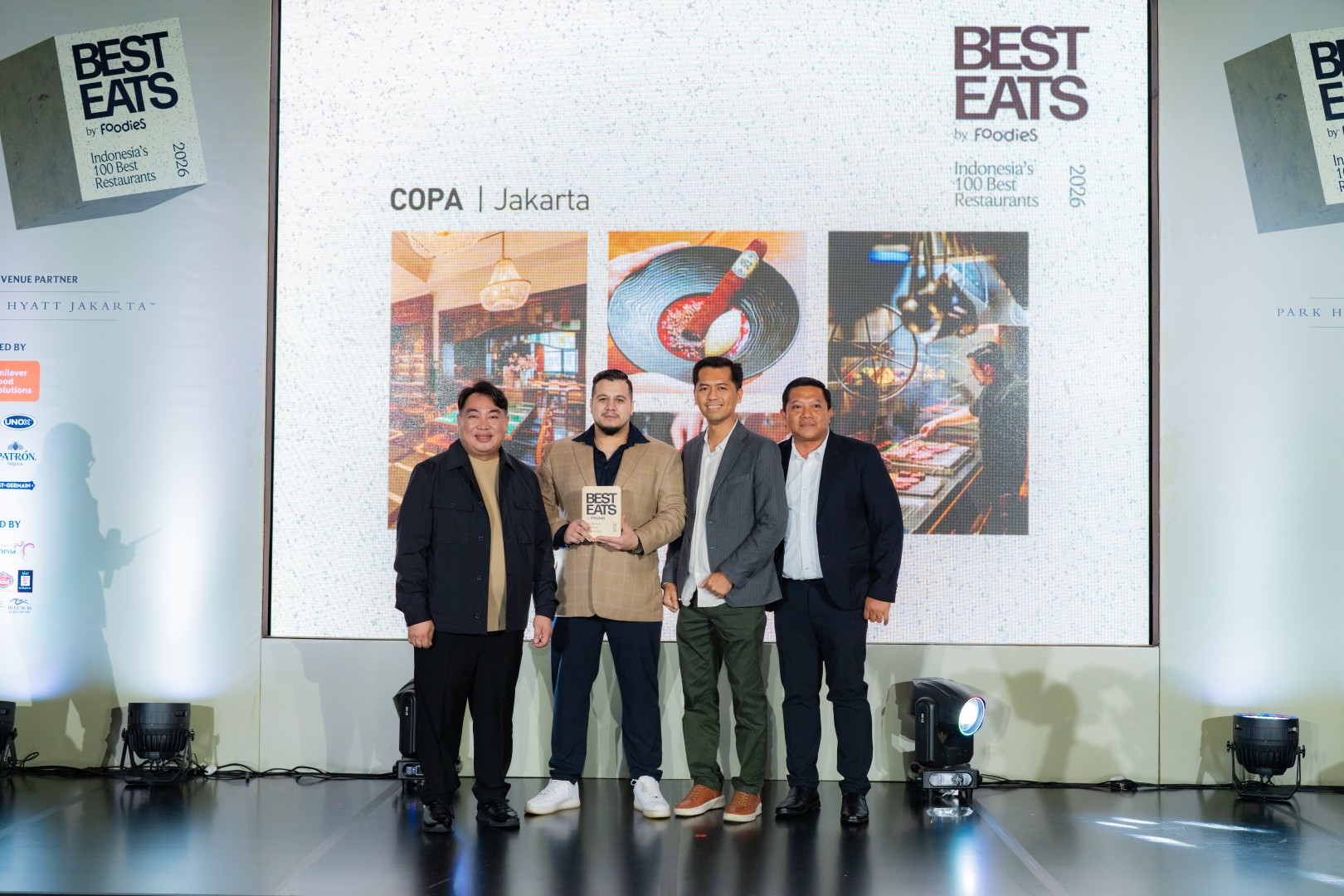
The city’s French contingent is well represented. Joëlle Restaurant in Senopati, inspired by the Louvre, pairs classical French cooking — escargots, beef bourguignon, soufflés — with a glass-ceilinged room that quietly echoes Paris. Pierre, a collaboration with Singapore’s award-winning Chef Brandon Foo, brings rustic French bistro cooking and seasonal ingredients to a Senopati address previously occupied by Emilie. Copa at 25hours Hotel The Oddbird takes a different direction — a wood-fired Latin American room where ceviche, Argentinian prime beef, and yerba mate cocktails converge. Sudestada, named for the Argentine wind believed to bring good fortune, runs as a three-concept address of grill, bar, and café built around the spirit of the open fire.
Indonesian cuisine finds its upmarket expression in several entries. Kaum, by Potato Head Group, presents the archipelago as a living archive — indigenous cooking methods, small-scale producers, communal tables. SEMAJA in Menteng, Ismaya Group’s first modern Indonesian dining concept, is led by Executive Chef Glenn Erari and reimagines traditional recipes through contemporary technique.
The Rooang at The Bimasena in Dharmawangsa takes familiar Indonesian flavours and gives them a more sophisticated and contemporary makeover. JUA Dining at The Grove Kebon Sirih expresses Javanese culinary heritage through modern elegance. Noesaka brings Indonesia’s regional diversity under one roof, from Pempek Palembang to Soto Mie Bogor, to diners at Plaza Indonesia. Plataran Menteng, housed in a restored Dutch colonial mansion, offers one of the city’s most storied Indonesian dining experiences across three floors of heritage architecture.
Other notable Jakarta entries include Henshin, spanning three floors of The Westin Jakarta as one of Indonesia’s highest restaurants serving Nikkei cuisine; Morimoto at The Langham Jakarta, Iron Chef Masaharu Morimoto’s first Southeast Asian restaurant on the 63rd floor; T’ang Court, the sister of The Langham Hong Kong’s three-Michelin-starred Cantonese restaurant on the 61st floor; OKU inside Hotel Indonesia Kempinski, where premium sushi and sashimi are built on seafood imported twice weekly from Tokyo’s Toyosu Fish Market.
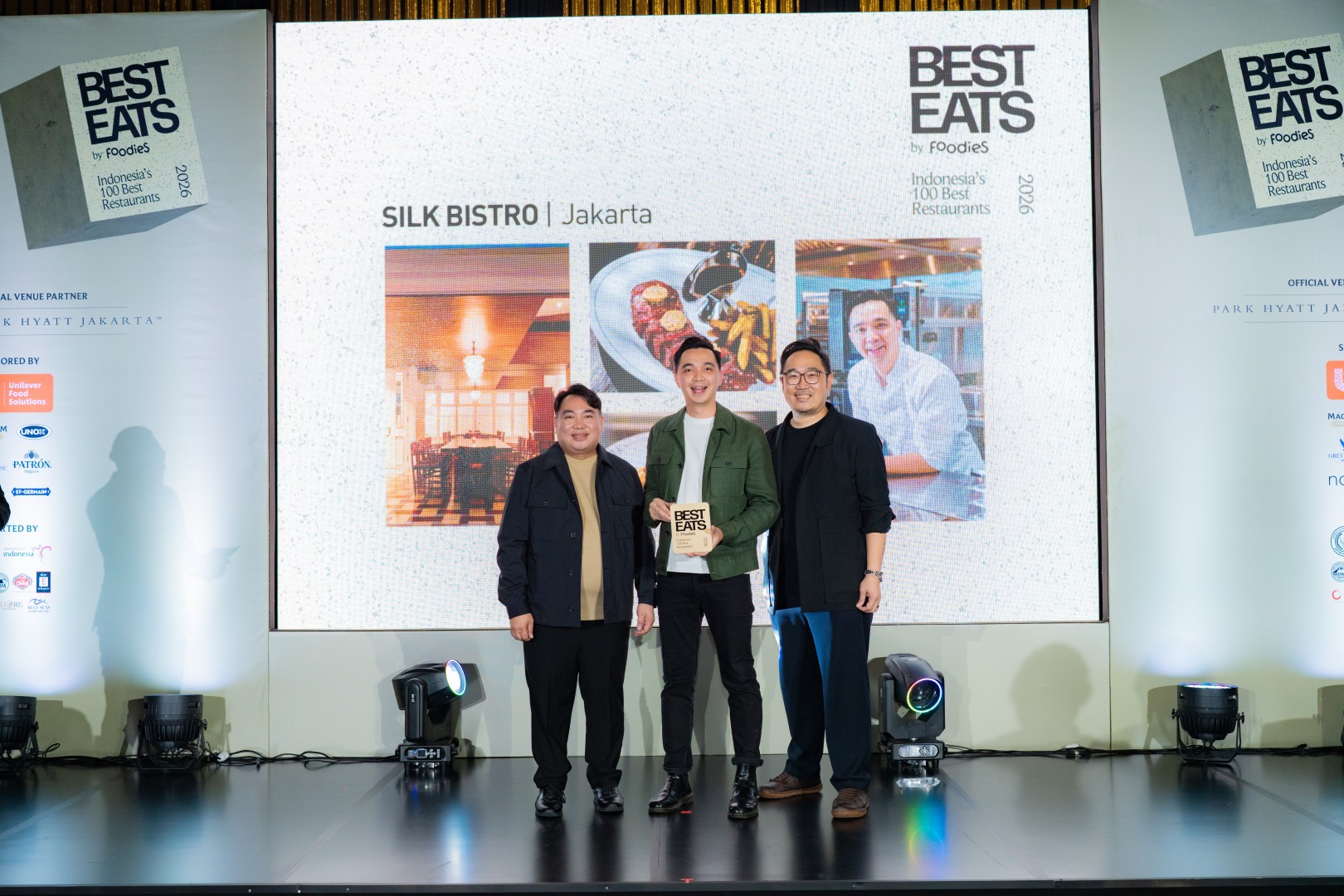
Ironplate, a Franco-Asian steakhouse with live teppanyaki in Kuningan; and Criollo at Plaza Indonesia, where chocolate is the lens through which the kitchen reimagines everything from shortribs to house-made gelato. Doeun in Menteng, Bar Luca in SCBD, Emilia Cucina Italiana in Permata Hijau, Franco Ristorante, Kilo Kitchen, Orijin Japanese Dining at Sari Pacific Jakarta, Pellegrini’s at Plaza Indonesia, Pizza 4P’s, Silk Bistro in Menteng, and Yialos Grill & Souvlaki near Senopati complete the capital’s representation.
Bali
Bali accounts for 14 of the 48 Upmarket Venue winners, spanning Seminyak, Canggu, Uluwatu, Sanur, Ubud, and Nusa Dua. Bar Vera Bistro & Wine Bar in Pererenan draws on European new-generation wine bar culture — French technique, local produce, honest approach. Bartolo in Uluwatu, founded by Brazilian hospitality veteran Rafael Nardo, is the island’s neighbourhood bistro: French and Italian classics, hand-rolled pici pasta, signature vermouths under the stars. BYRD House on Segara Beach in Sanur moves seamlessly from morning coffee to candlelit Italian-Mediterranean dinner shaped by the Balinese coast.
CURE at Regent Bali Canggu brings the concept of the Michelin-starred CURE Singapore to the Canggu coastline through European precision and Asian layering. Lulu Bistrot on Jalan Batu Bolong in Canggu serves French bistro classics in a room that feels both refined and effortlessly lively. Mama San, Chef Will Meyrick’s pan-Asian institution in Seminyak, has anchored the island’s dining scene for over 15 years. MeiMei in Canggu is a modern Southeast Asian barbecue restaurant rooted in Balinese spices and heirloom family recipes.
Mosto in Berawa, Indonesia’s first natural wine bar, opened in 2021 as a neo-bistro where French-Italian fare is cooked to match minimal-intervention bottles. Nusantara by Locavore presents lesser-known regional Indonesian dishes across the archipelago’s 17,000 islands. Santanera across three floors in Canggu is Colombian chefs Andrés Becerra and Germán Rincón’s translation of Latin America into Bali. Sawah Terrace at Mandapa, a Ritz-Carlton Reserve in Ubud, overlooks the Ayung River with an all-day Indonesian menu drawn from the chef’s organic garden.
SHELTER in Pererenan is a wood-fired Middle Eastern and Mediterranean concept on the coast. The Long Table Restaurant & Bar by John Hardy in Seminyak presents a monthly-rotating Indonesian feast within the jewellery boutique and gallery. Yuki, founded by Rai Sutama and now spanning Canggu and Uluwatu, is Bali’s modern Japanese izakaya — traditional technique, locally sourced ingredients, charcoal and wood-fire at the centre.
Bandung contributes two one to the Upmarket Venues list. Karbon, on the rooftop of Hotel Indigo Dago Pakar high above the city’s rolling hills, is an open-flame restaurant where charcoal and live grilling are not just technique but spectacle.
Arpo, Chef Arnold Poernomo’s modern Asian restaurant, operates on a straightforward premise: the chef cooks every dish himself, and dishes like chili crab noodles, duck confit, and pandan churro reflect a kitchen that takes familiar comfort and gives it new precision.
Labuan Bajo
Umasa Restaurant at TA’AKTANA, a Luxury Collection Resort in Labuan Bajo, is the list’s most remote entry — an Indonesian family-style dining experience that draws on the fresh produce of the Flores region and travels from Sabang to Merauke in a single menu.
If the Fine Dining list represents the highest expression of Indonesian gastronomy and the Casual Dining list celebrates the country’s everyday favorites, the 48 Upmarket Venue winners reveal perhaps the clearest picture of where Indonesia’s restaurant scene stands today: confident, international in its references, rooted in local ingredients and identity, and stretching across a wider geography than any previous edition of the awards has captured.