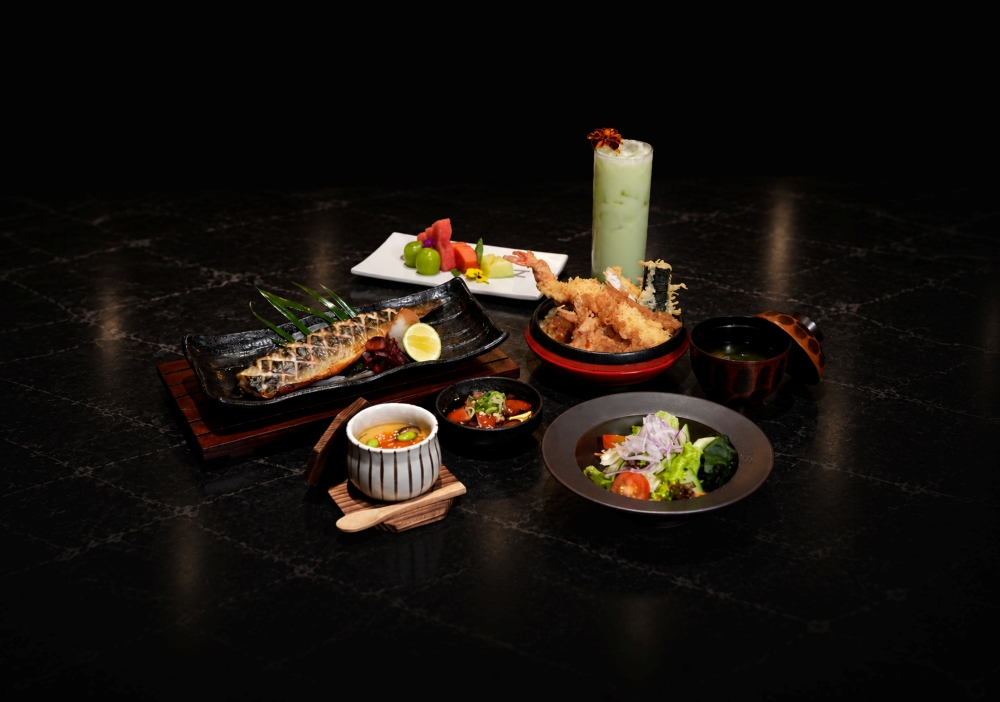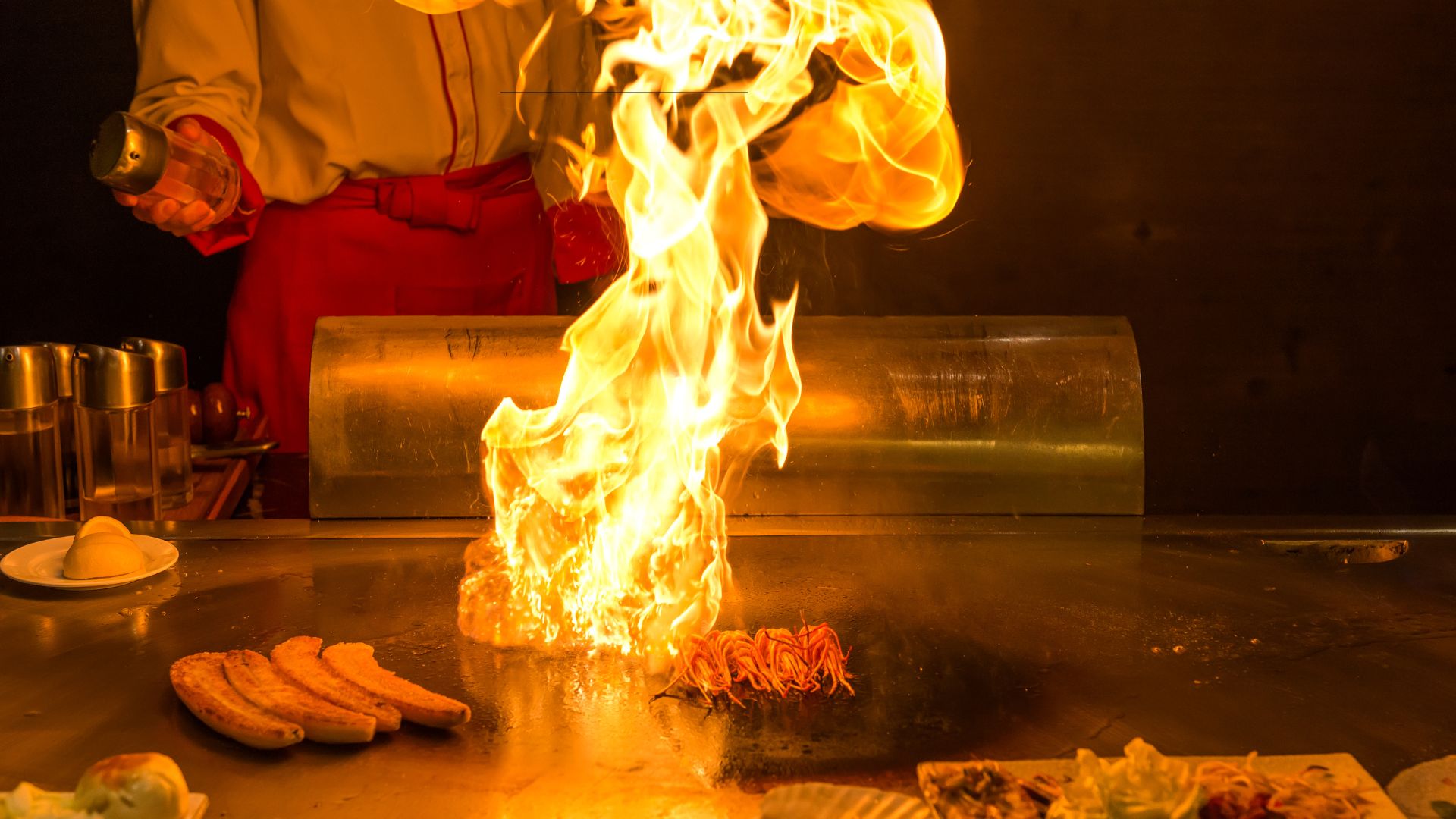
The word teppanyaki is a compound of two Japanese terms — teppan, meaning iron plate, and yaki, meaning grilled or pan-fried. As a dining format, it is relatively modern: the first teppanyaki restaurant, Misono, opened in Kobe in 1945, originally catering to Western visitors in postwar Japan who were more familiar with grilled meat than with traditional Japanese cuisine. What began as an adaptation quickly became an art form. Chefs developed a performance language around the iron griddle — precision knife work, controlled flames, the theatrical rhythm of ingredients moving across a flat, intensely hot surface — that turned dinner into something closer to theatre.
The format spread globally through the 1960s and 1970s, carried in part by the Benihana chain in the United States, which introduced American diners to the teppanyaki counter as a communal, interactive experience. In Japan, however, the tradition retained a more refined character — focused less on showmanship and more on the quality of the ingredient, the precision of the heat, and the relationship between chef and diner across the iron grill. It is this version of teppanyaki — disciplined, ingredient-led, and deeply hospitality-driven — that has taken root in Bali, where a growing number of restaurants are treating the format with the seriousness it deserves.
Below, seven restaurants across the island that are worth the reservation.
Shichirin
Operating under the Wonderspace group, Shichirin brings three Japanese dining experiences under one roof — teppanyaki, gyukatsu, and izakaya — across three Bali locations in Seminyak, Canggu, and Ubud. Each branch maintains its own distinct menu while sharing the same commitment to live-grill cooking and chef performance. At the Seminyak outpost, a moon sculpture behind the teppanyaki counter pays homage to the Japanese tradition of Tsukimi, or moon-watching. Wagyu, premium seafood, and seasonal vegetables are grilled to order, with sake and Japanese-inspired cocktails rounding out the experience.
Kojin Teppanyaki
Named after Kojin, the Japanese deity of fire, the hearth, and the kitchen, this Ubud restaurant takes its concept seriously. Set within the forested valley near the Tegallalang rice terraces, the all-wood dining room is built around an open teppanyaki counter where chefs work through both à la carte and omakase menus. Local ingredients are blended with Japanese technique, and the setting — rice field views, earth tones, jungle quiet — is part of what makes dinner here distinct from anything on the coast.
KO Japanese Restaurant
One of the island’s longest-standing Japanese restaurants, KO operates across three formats — teppanyaki counter, sushi bar, and cocktail lounge — under executive chef Mitsuaki Senoo. The teppanyaki experience seats diners around two counters where chefs prepare grilled specialities with controlled precision. Fresh seafood is sourced daily from local Jimbaran Bay fishermen, and the sake cocktail menu is among the more considered on the island.
Mori
With only ten seats at the counter, Mori is Ubud’s most intimate teppanyaki experience and arguably its most rigorous. The kitchen operates on a philosophy of kansha — respect for ingredients — and omotenashi, the Japanese principle of wholehearted hospitality. Seasonal tasting menus, which change to reflect what is available from the restaurant’s own Tegallalang garden and select suppliers in Japan, are served simultaneously to all guests at the counter. Premium proteins including Miyazaki Wagyu A5 and Hokkaido scallop feature alongside locally grown produce. Reservations are essential and seats fill quickly.
Rayjin Teppanyaki
The longest-running standalone teppanyaki restaurant in Bali, Rayjin has operated from its Petitenget address since 2013. The concept is built around omotenashi — guests are greeted with Japanese formality, and the energy at the teppanyaki counter is warm and consistently high. The menu leans toward fusion, incorporating Japanese, Western, and Indonesian flavours across its set menus and à la carte selections. A second location in Ubud on Jl. Hanoman and a third at Sidewalk Jimbaran have expanded the brand without diluting what made the original worth returning to.
Shima Teppanyaki & Shabu Shabu
A Petitenget institution with a devoted repeat-visitor following, Shima is one of the few Bali restaurants that combines a serious teppanyaki counter with an equally serious shabu shabu offering. Internationally trained chefs work with Australian beef, imported wagyu, and locally caught fish delivered fresh daily. The owner greets guests personally — a detail regulars mention consistently — and the atmosphere is relaxed without being casual. For those new to the format, the teppanyaki set menus are a reliable entry point.
Tenkai Japanese Nikkei Restaurant
Tenkai takes the most distinct approach of any restaurant on this list, fusing Japanese teppanyaki with Peruvian Nikkei cuisine under the direction of chef Sandro Medrano. The result is a menu that moves between ceviches, robata anticuchos, and action-packed teppanyaki counters — a combination that reflects the historical migration of Japanese communities to South America and the culinary tradition that emerged from it. Three teppanyaki experiences are available, each progressing through seafood, vegetable, and meat courses. Dinner only; reservations strongly recommended.